Ask any experienced healthcare AP director what work their team should be doing but isn't, and you'll get a consistent list.
Vendor master file maintenance, the quarterly clean-up that Debra Richardson has written about extensively, that keeps vendor data accurate, reduces duplicate payments, and prevents the inquiry volume that flows from dirty data. Early-pay discount program management that captures the full range of available prompt payment terms rather than the 60-70% that most teams manage. Payment term optimization analysis that identifies opportunities to improve working capital. Vendor relationship management that's strategic rather than apologetic.
These aren't exotic ambitions. They're standard best-practice AP functions that healthcare AP departments know they should perform and rarely have time for.
The reason is inquiry handling. Every hour the team spends answering vendor emails about invoice status is an hour not spent on vendor master file maintenance. Every afternoon consumed by the end-of-month statement reconciliation fire drill is an afternoon not spent analyzing early-pay discount performance. The tactical grind is displacing the strategic work.
This isn't a motivation problem or a prioritization problem. It's a capacity problem with a specific cause.
The Feedback Loop That Keeps Teams Stuck#
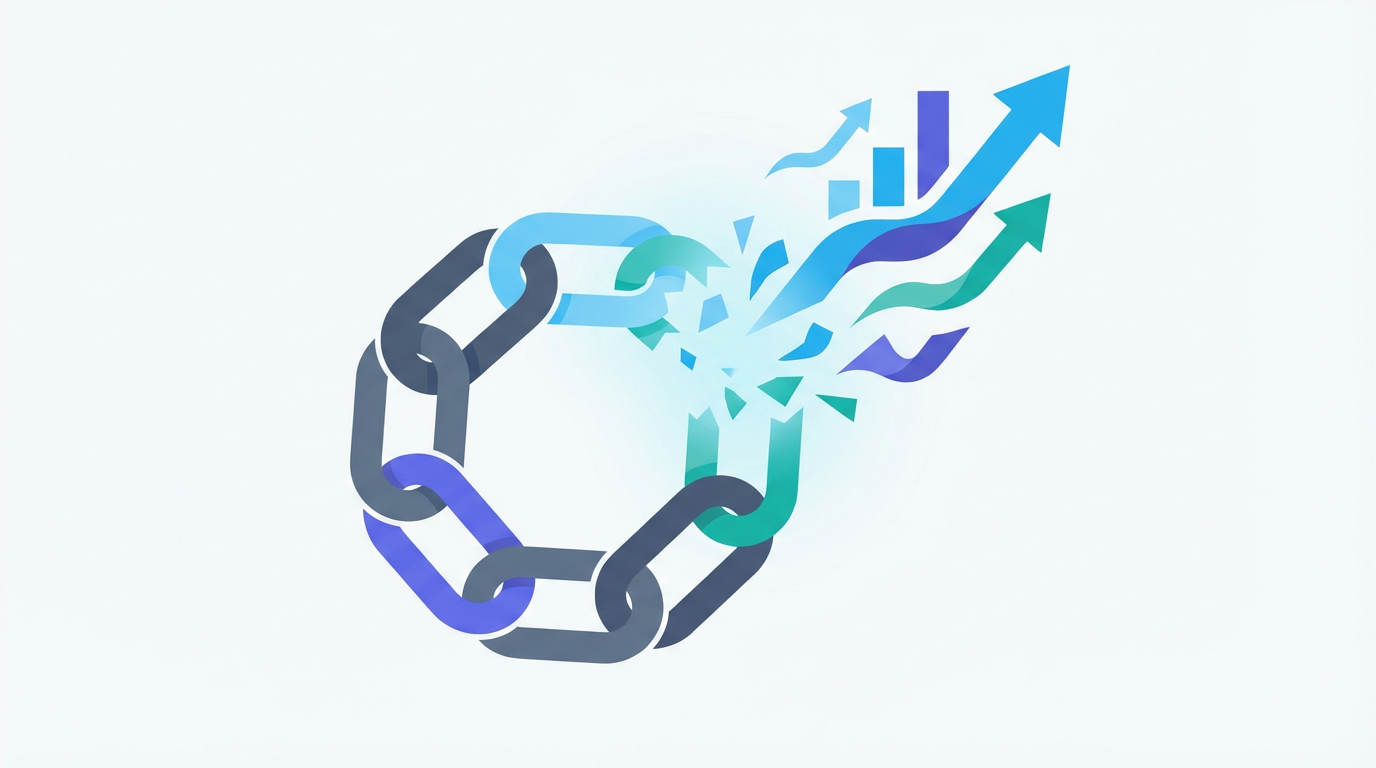
The relationship between inquiry volume and strategic work isn't linear. It's a feedback loop that reinforces itself over time.
Dirty vendor data creates more inquiries. A vendor master file with duplicate records, outdated email contacts, mismatched entity names, and missing remittance addresses generates inquiry volume that wouldn't exist with clean data. Vendors whose emails don't match any known domain generate manual disambiguation work. Invoices coded to the wrong vendor record require correction that generates inquiries. Every data quality gap in the vendor master file is a future inquiry in the inbox.
More inquiries prevent data cleanup. The team needed to clean up the vendor master file is the same team that's answering the inquiries generated by the dirty vendor master file. There aren't separate headcounts for "strategic AP" and "tactical AP." When tactical demand is high, strategic work doesn't get done.
Uncleaned data generates more inquiries. And the cycle continues.
Debra Richardson's "How Often Should You Clean Your Vendor Master File?" post recommends a quarterly review cadence, a structured process for identifying and correcting duplicate vendors, inactivating vendors with no recent activity, updating contact information, and validating remittance details. She notes that organizations with regular clean-up cycles have materially lower inquiry volume because clean data reduces the ambiguity that generates inquiries.
Most healthcare AP teams read that recommendation, agree with it, and never implement it. Not because they don't understand the value. Because they don't have four hours a quarter to dedicate to a strategic project when the inquiry inbox is at 80 unread.
Quantifying the Opportunity Cost#
Let's put numbers to what this displacement costs, using realistic healthcare AP economics.
A typical AP customer service team handling vendor inquiries at a 500-bed hospital consists of four reps plus an AP manager. Inquiry handling consumes roughly 60% of each rep's time on a standard day, based on the 5-7 minutes per inquiry and 60-120 inquiries per day figures we've discussed throughout this series. That's approximately 3 to 4 hours per rep per day on routine inquiry handling.
Across four reps, that's 12 to 16 hours of daily capacity consumed by inquiry handling that could, with better processes or tooling, be reduced.
If inquiry handle time were reduced by 40%, from an average of 7 minutes per inquiry to 4 minutes through better ERP data access and response tooling, a team of four reps would recover 4-6 hours of collective capacity per day. Across a work year, that's 1,000 to 1,500 hours of recovered team capacity. That's not a small number.
What does 1,000 to 1,500 recovered hours enable?
Vendor master file maintenance. A thorough quarterly vendor master file review for a 500-bed hospital takes approximately 40-60 hours of AP staff time per cycle. At four cycles per year, that's 160-240 hours annually. Fully covered by the recovered capacity, with room to spare.
Early-pay discount program management. Actively monitoring early-pay discount eligibility, flagging disputes that need resolution before discount windows close, and communicating with procurement to accelerate approvals takes approximately 2-4 hours per week for a team managing a meaningful discount program. That's 100-200 hours annually. The ROI, as discussed earlier in this series, is potentially hundreds of thousands of dollars per year in captured discounts. This is capacity that most teams simply don't have.
Payment term optimization. Analyzing vendor payment terms against working capital objectives, identifying vendors where extended terms could be negotiated, and building the data-supported case for those negotiations is a 20-40 hour annual project with meaningful CFO-level implications. Currently not happening at most healthcare AP departments because there's no time to do it.
Vendor relationship management. Building structured relationships with the AR managers at the top 20-30 vendors by spend, including the proactive communication, the annual review calls, and the goodwill built by being a responsive customer, is ongoing, non-quantifiable work that compounds over time. Every hour invested in this earns back in supply chain resilience, pricing flexibility, and reduced escalation volume.
What the AP Function Could Look Like#
The vision here isn't a department that has solved the inquiry problem and now sits idle. It's a department that handles the same or greater inquiry volume with substantially less per-inquiry handle time, freeing capacity for the work that currently doesn't get done.
That looks like an AP team that answers vendor inquiries faster and with fewer errors, meaning better vendor experience, lower escalation rate, and higher early-pay discount capture. It also looks like an AP team that maintains a clean vendor master file on a regular cadence, runs a real early-pay discount program rather than an aspirational one, provides procurement leadership with payment analytics that inform negotiation strategy, and manages vendor relationships at a level of intentionality that builds long-term supply chain resilience.
The strategic AP function is not a different team. It's the same team with recovered capacity applied to higher-value work.
The ERP Context: PeopleSoft and the Cycle Problem#
Healthcare AP teams running Oracle PeopleSoft Financials face a particularly acute version of the cycle described in this post. PeopleSoft vendor inquiry automation in healthcare has historically been underdeveloped. PeopleSoft's AP module is designed for invoice processing and payment workflow, not for the vendor communication layer that generates most of the tactical burden.
AP teams on PeopleSoft typically handle vendor inquiries by manually navigating PeopleSoft's Vendor Lookup and AP transaction modules, a series of menu-driven screens to find invoice status, payment dates, and hold reasons. The per-inquiry handle time in PeopleSoft environments is consistently on the higher end of the 5-10 minute range, because PeopleSoft's interface was not designed for high-volume, rapid-fire inquiry lookups.
PeopleSoft vendor inquiry automation in healthcare specifically means connecting the vendor communication workflow directly to PeopleSoft's data via API, eliminating manual navigation and surfacing the relevant invoice data automatically for each incoming vendor email. This is the cycle break that is most impactful in PeopleSoft environments: not working harder within the existing manual process, but removing the manual lookup step entirely.
The same principle applies to Infor CloudSuite and Workday environments. The specific ERP shapes how difficult the lookup step is, but in all cases the tactical grind that displaces strategic work can be interrupted at the same point: the ERP data retrieval that currently costs 3-7 minutes per inquiry.
The First Cycle Break#
The tactical-strategic feedback loop described above has to be broken at the tactical level first. You can't clear time for strategic work by scheduling it and hoping the tactical demand self-manages. The tactical demand has to be reduced.
This reduction has two levers: process improvement and tooling. Process improvement, including better triage, response templates, inquiry routing, and proactive hold monitoring, can recover meaningful capacity without any technology investment. The improvements described in earlier posts in this series are within reach for most teams operating with existing tools and staff.
Beyond process improvement, teams that reduce per-inquiry handle time from 7-10 minutes to 2-3 minutes through AI-assisted ERP lookup and response drafting achieve the larger capacity recovery that makes the strategic work genuinely feasible, not just theoretically possible.
The goal, in both cases, is the same: break the cycle at the point where it can be broken. Reduce the tactical burden enough that the team has capacity to do the strategic work that reduces the future tactical burden. The first cycle break is the hardest. Every subsequent one is easier, because the strategic work compounds.
Healthcare AP teams are not a tactical function that aspires to be strategic. They're a strategic function that has been buried in tactical demand. The question is what it would take to dig out, and whether the investment in doing so is worth the return.
The numbers say it is, clearly.
For the specific capacity recovery math, the invisible backlog post provides the cost framework, and the five vendor inquiry KPIs gives you the measurement infrastructure to prove the improvement to leadership. For PeopleSoft environments specifically, building your healthcare AP tech stack covers what a PeopleSoft vendor inquiry automation integration looks like at each layer.
Break the Cycle Starting This Quarter
Auxtri reduces per-inquiry handle time from 5-10 minutes to under 30 seconds, recovering the capacity that makes strategic AP work feasible. Request a demo and we'll show you the math on how PeopleSoft vendor inquiry automation would change the cycle for a team your size.